Colony Flow Level 529 Walkthrough Solution & Guides | How to solve Colony Flow 529

Guide By Liam Stone
Updated on July 30, 2026
The video above breaks down Level 529 visually, so skip the text below if you'd rather watch.
Video doesn't match your screen?
Game updates frequently scramble layouts! Try our AI Screenshot Solver first to find your exact board instantly, or report broken guides to our team.
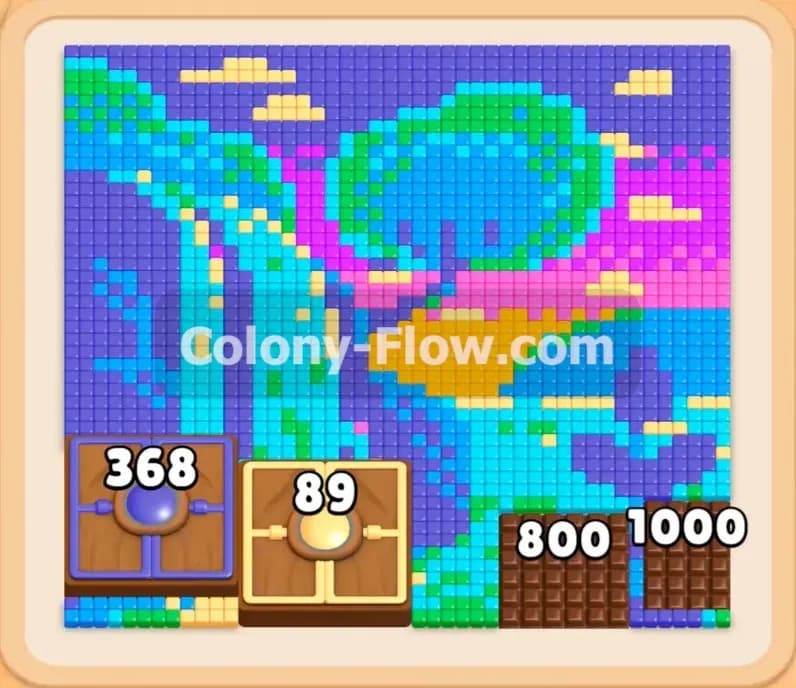
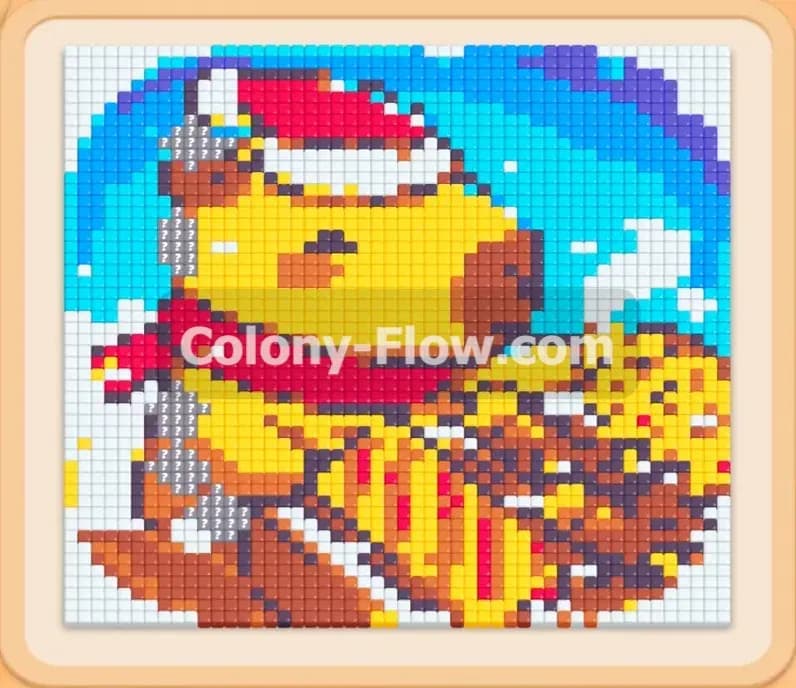
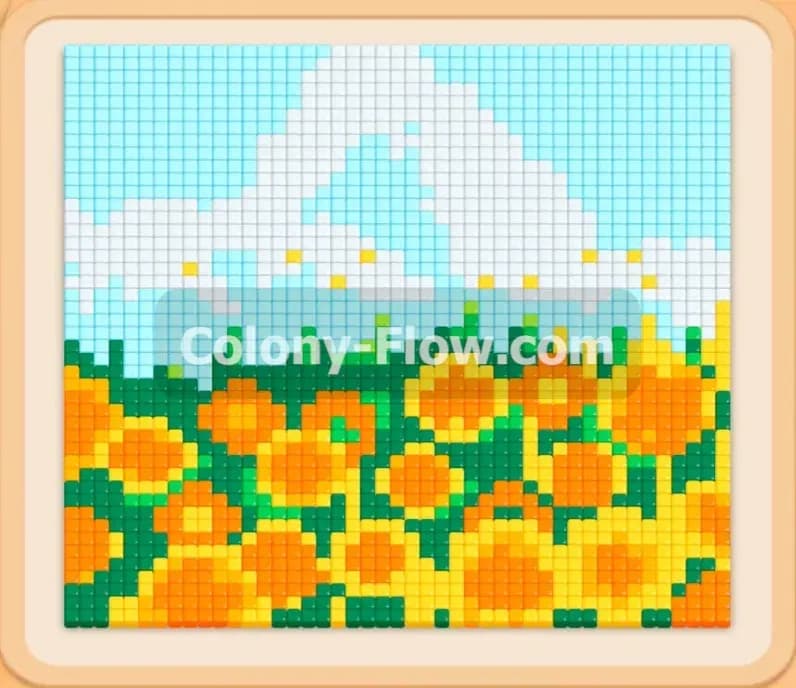
Colony Flow Level 529 drops you into a beautiful summer landscape filled with bright blooming sunflowers. You have to guide your ants through a dense layer of petals and stems to reach the fluffy clouds and blue sky above. I played this level extensively to figure out the exact sequence that keeps the board moving. You will find everything you need to know below.
Colony Flow Level 529 Overview
What You Are Working With
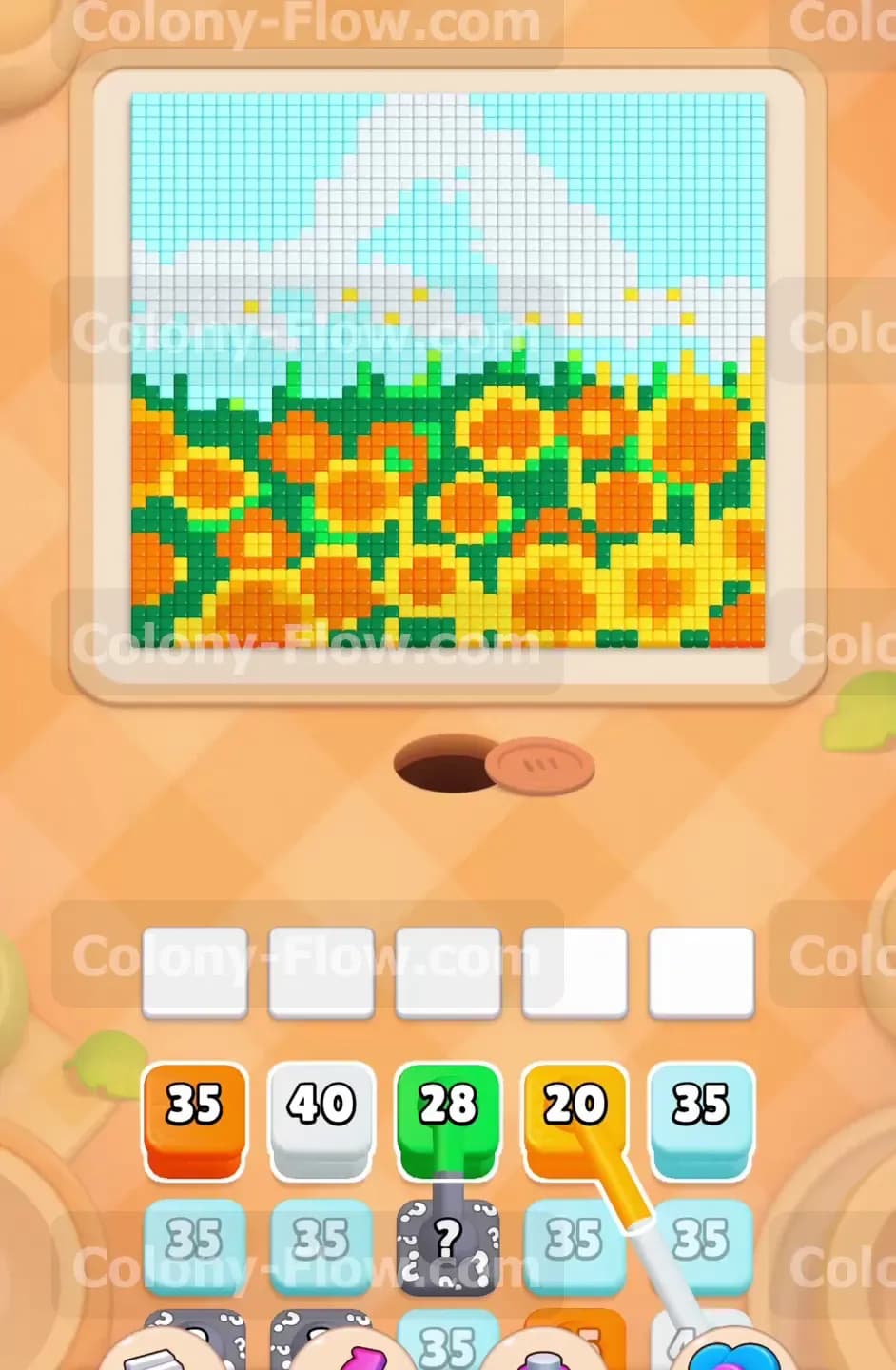
The puzzle board displays a massive field of sunflowers. The bottom half is packed with yellow petals, orange flower centers, and green leaves. The top half features a wide light blue sky broken up by fluffy white clouds. Looking at the tray at the bottom of the screen, you will find a mix of colors corresponding to these elements. You also have to deal with Connected Boxes and Hidden Boxes. Connected Boxes are multiple blocks joined together by a visible link. When you tap one part of a connected box, the entire group moves into your waiting slots simultaneously. This instantly fills up multiple spaces in your limited slot bar. Hidden Boxes appear as solid grey squares featuring a single question mark. You cannot tell what color a hidden box holds until you clear the blocks resting in front of it in the tray. Once exposed, the hidden box flips around to reveal a standard colored and numbered block. These special tiles dictate the pace of the entire puzzle.
What It Takes to Clear Level 529 Board
Winning this level requires strict management of your five waiting slots. You lose the game immediately if you fill all five slots with blocks that have no open paths on the puzzle board. The key strategy for clearing the picture involves working from the outside edges inward. You must open the bottom boundary by feeding the yellow petals to your ants first. At the exact same time, you need to clear the left and right sides of the sky to make room for the light blue and white ants. Balancing your moves between the lower flowers and the upper sky prevents the board from dead ending. Every single tap must serve a clear purpose to keep the ants moving across the screen without any interruption.
Colony Flow Level 529 Step by Step Solution
Step 1: Target the bottom yellow petals to open the lower board boundary
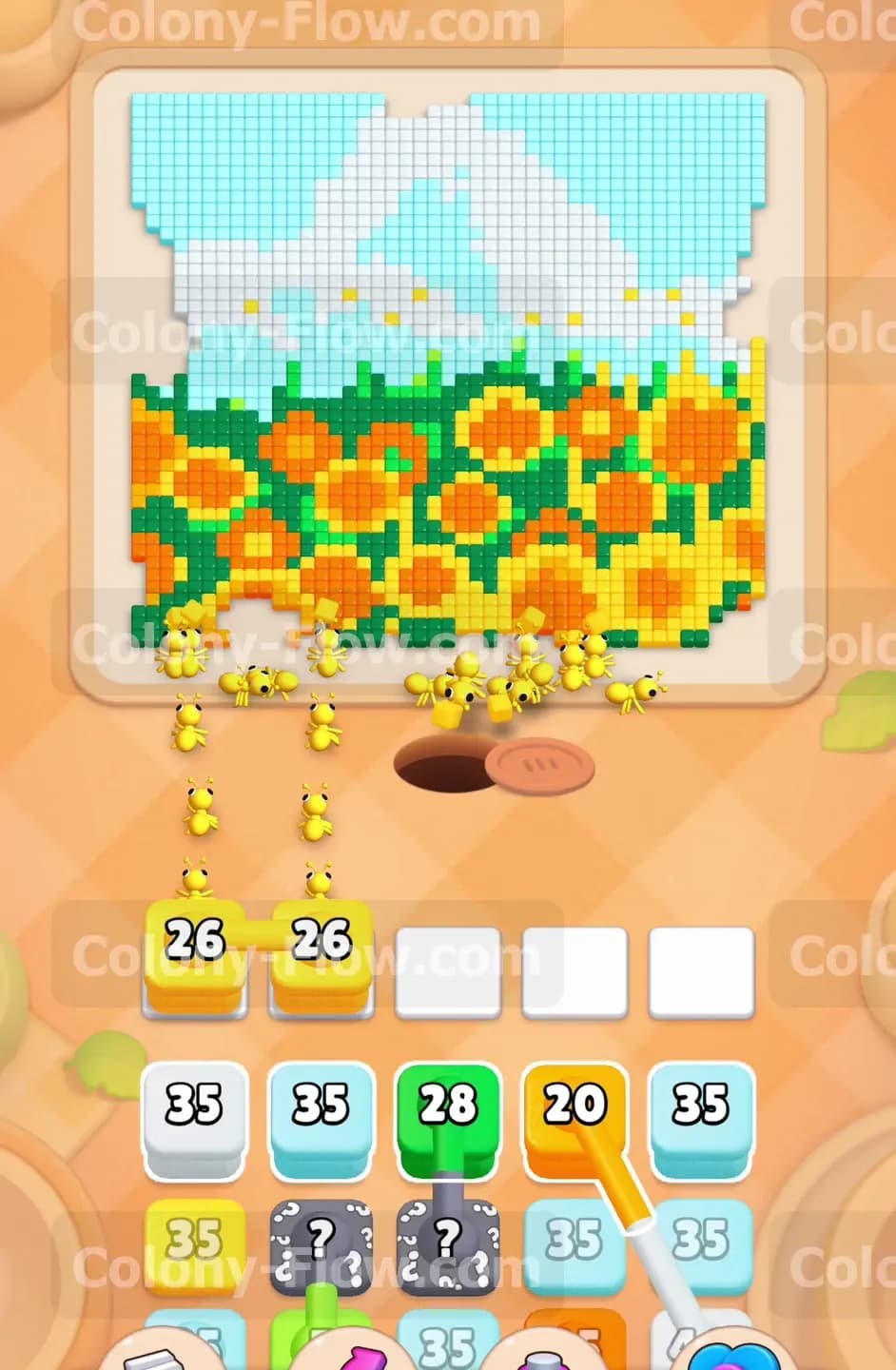
Your first move focuses on the yellow petals lining the bottom edge of the picture. The ants enter from the nest hole right below this section. Pull the yellow blocks from your tray to send a stream of yellow ants straight into the lower flowers. These yellow tiles form a thick barrier that blocks access to the orange centers and the green stems further up. By clearing the bottom row of petals first, you create a wide open space for future colors to travel through. The yellow ants will carve a path directly upward into the design. Watch your five waiting slots closely. You only want to tap a yellow block when you are absolutely sure the ants have direct contact with a yellow tile on the board. The bottom edge provides plenty of exposed yellow tiles to get you started safely. Managing this initial space dictates the success of the rest of the level.
Step 2: Deploy light blue and white blocks to clear the side edges
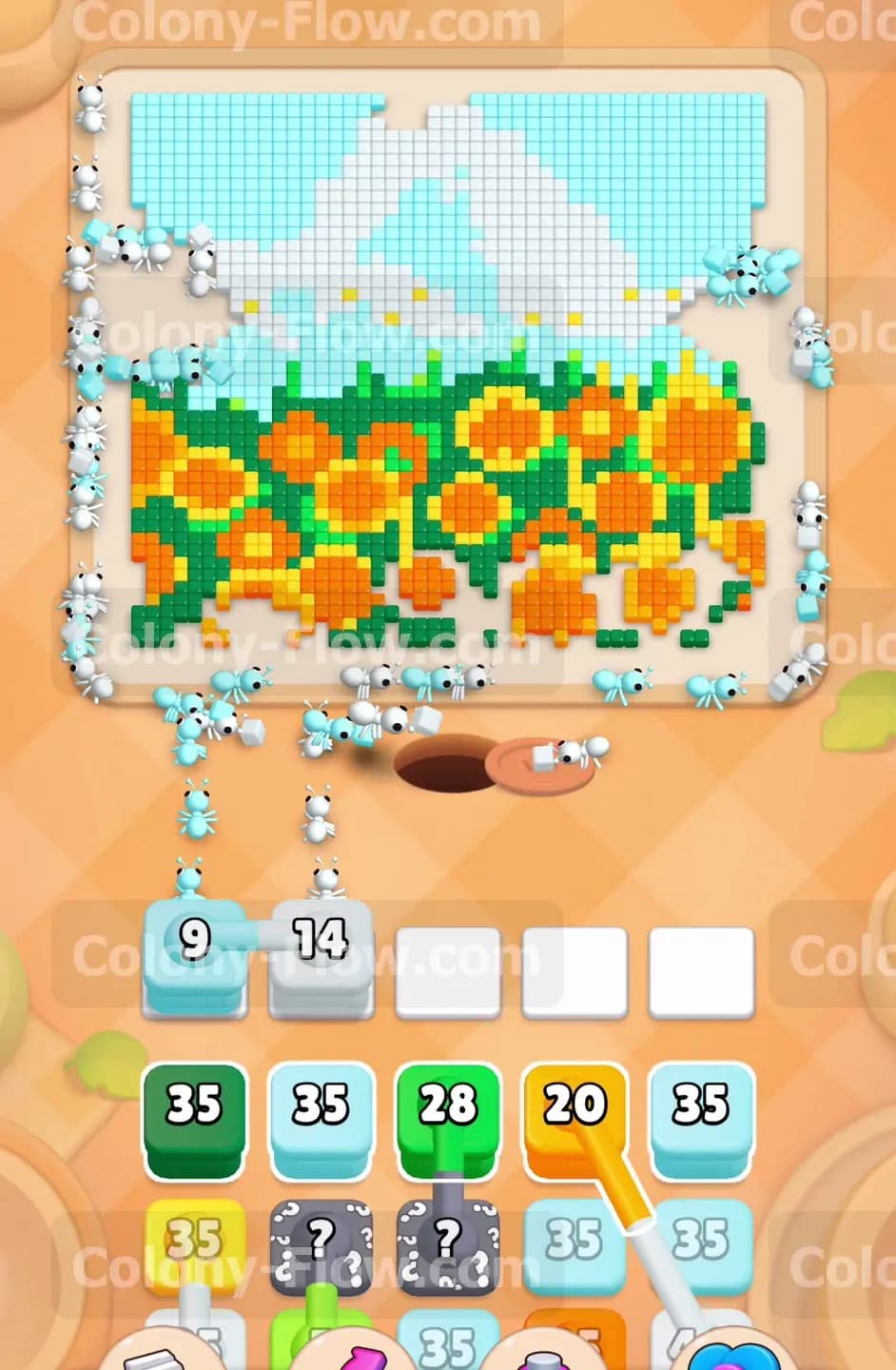
Once the bottom edge has some breathing room, you need to shift your attention to the upper half of the picture. The left and right sides of the board are perfectly exposed to the light blue sky and some white clouds. Tap the light blue blocks and the white blocks in your tray to launch those ants. They will travel up the empty sides of the canvas to reach their matching tiles. Doing this accomplishes two very important things. First, it clears a massive amount of tiles from the board without interfering with the complex flower section. Second, it pulls blocks out of your tray to uncover the hidden boxes underneath. Light blue ants have a massive area to cover in the top corners. The fluffy white clouds sit right next to the blue sky borders. Keep alternating between light blue and white as long as those outer edges remain accessible. This keeps your waiting slots clear and constantly cycling.
Step 3: Clear the exposed green leaves and stems
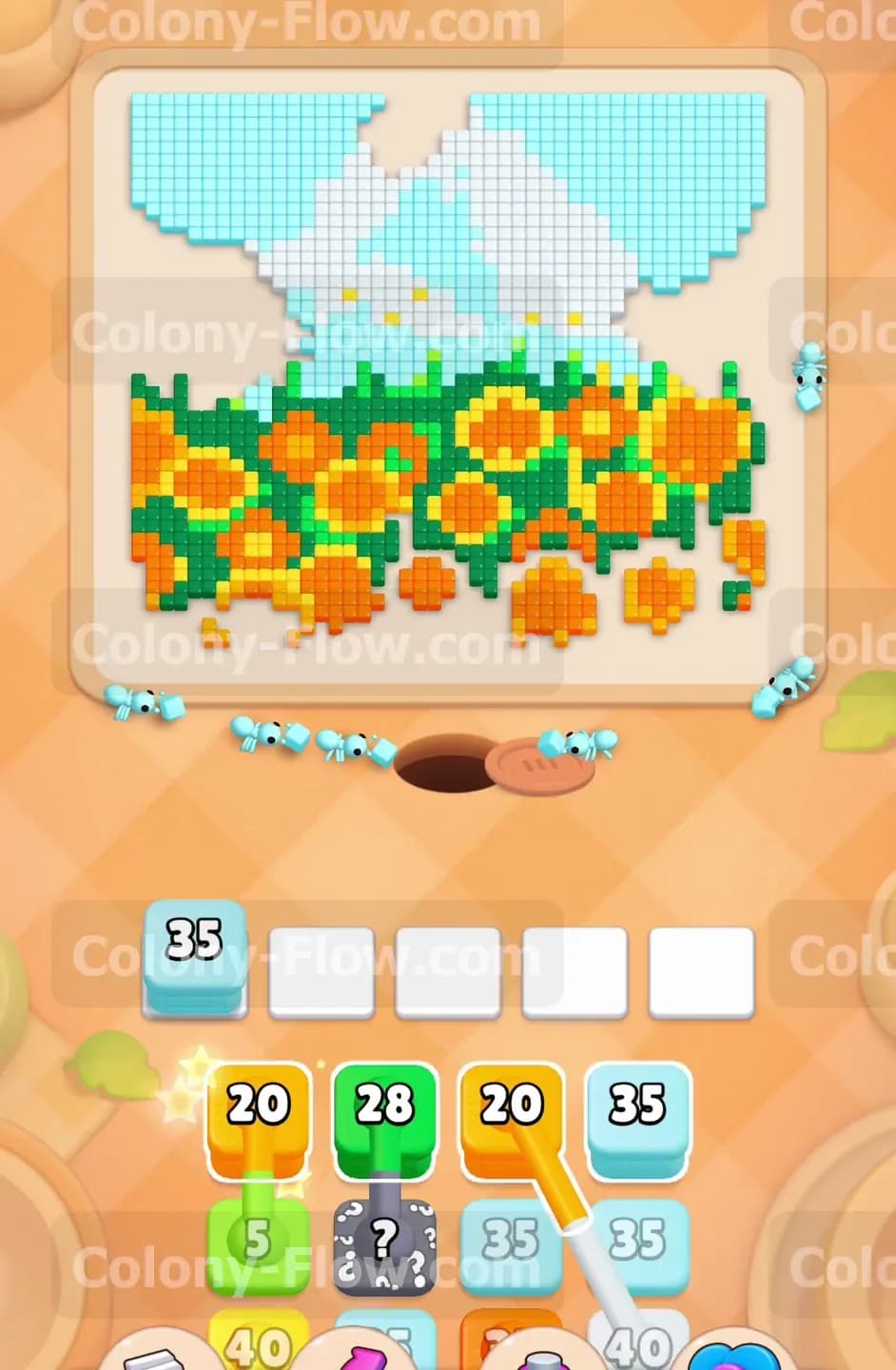
With the sides opening up and the bottom yellow petals thinning out, the green leaves and stems will become fully exposed. Bring your green blocks up from the tray into the waiting slots. The green ants will weave through the gaps you created in the yellow flowers to eat the leafy sections. You will notice that the green tiles are scattered around and between the sunflowers. Green ants move in a jagged pattern to reach the scattered leaves. You must ensure you have a continuous path to these scattered tiles before tapping a green block. If a green stem is completely surrounded by orange or yellow tiles, do not pull the green block yet. Wait until the surrounding colors are cleared. You want to avoid isolating a green leaf behind a wall of orange. Managing the green blocks carefully prevents them from sitting idle in your waiting slots and causing a frustrating traffic jam.
Step 4: Manage the connected yellow boxes for the remaining petals
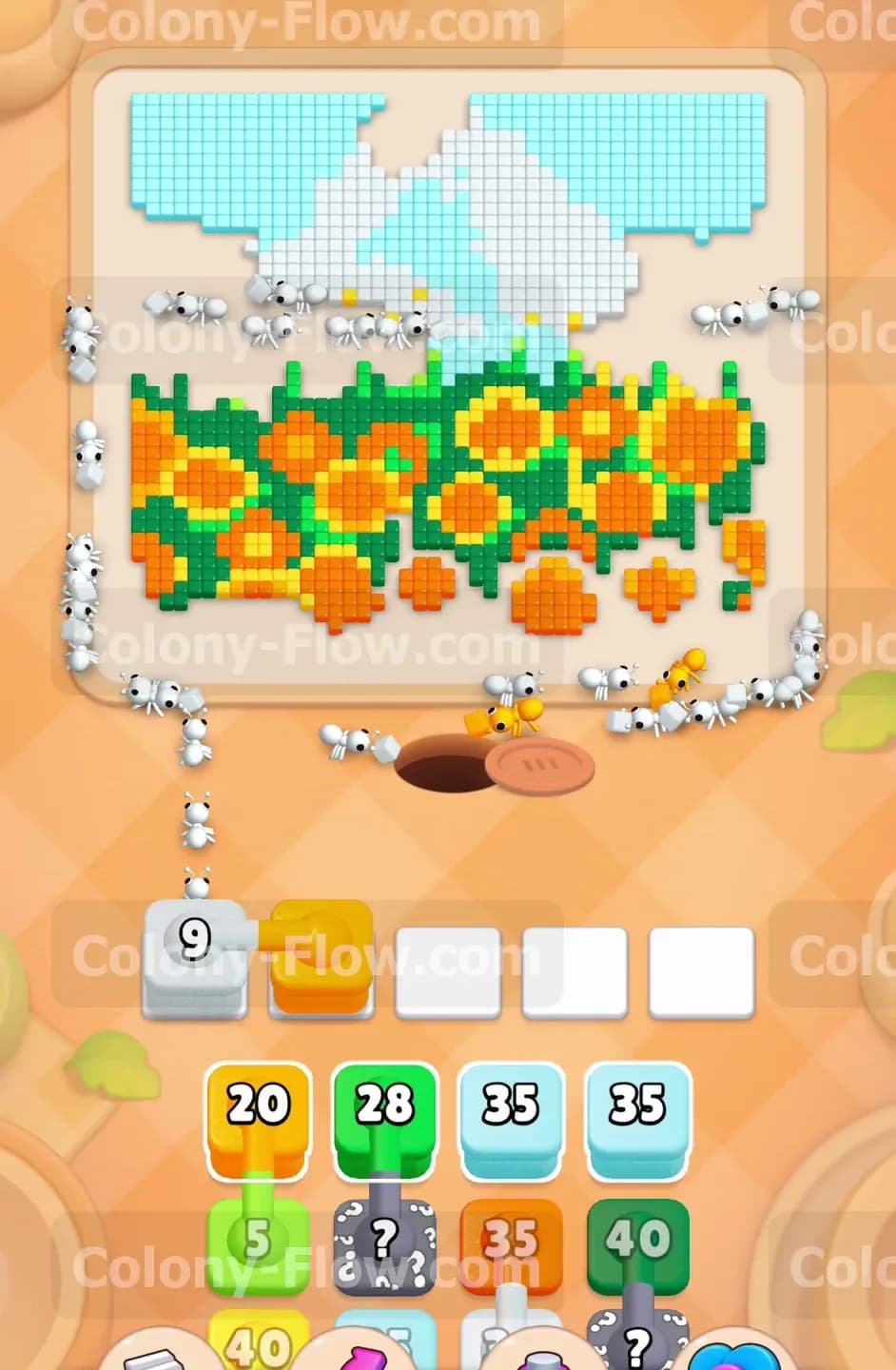
As you dig deeper into the tray, you will encounter connected yellow boxes. These are blocks linked together that must move into the waiting slots as a group. Before you tap a connected box, count your empty waiting slots. You must have enough empty space to hold the entire group. Furthermore, you need a large amount of exposed yellow tiles on the board to drain these high numbered blocks quickly. Send these connected yellow ants to finish off the thick clusters of petals surrounding the orange flower centers. The ants will swarm the remaining yellow sections and completely isolate the orange centers. Connected blocks are powerful but dangerous if used carelessly. Watch the numbers on the yellow blocks count down rapidly as the petals disappear. Always make sure the paths to the upper yellow petals are fully open before committing to these connected boxes.
Step 5: Send orange ants to consume the isolated flower centers
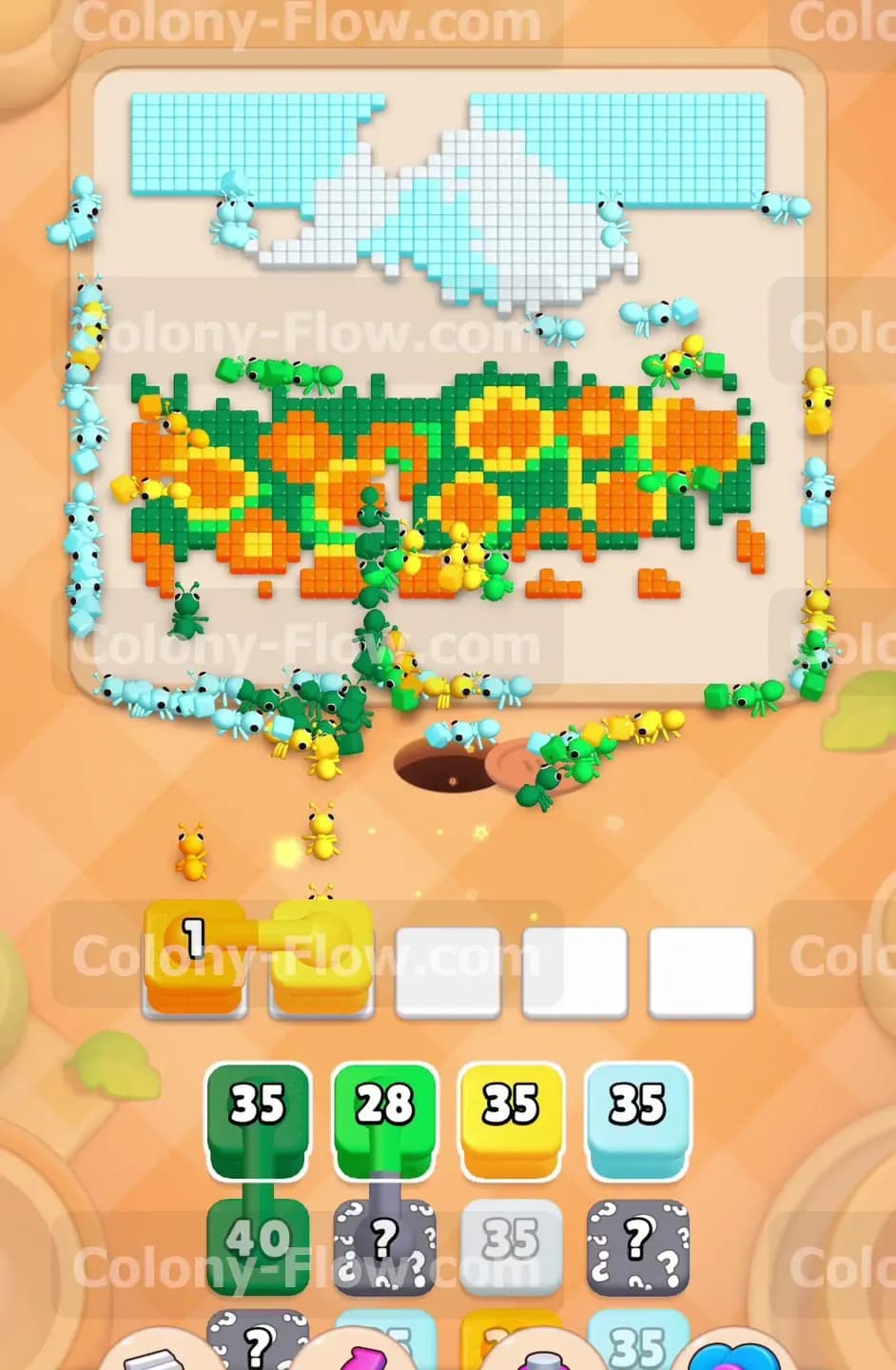
Now that the yellow petals are mostly gone, the bright orange sunflower centers are completely undefended. Pull the orange blocks from your tray. The orange ants will stream up from the nest hole and devour the large circular orange sections. Since you cleared the yellow and green tiles first, the orange ants have a short and direct route to their targets. Orange ants form a massive swarm when they have a clear path to the centers. This clears out the very heart of the sunflower field. The orange blocks in your tray hold large numbers. You will watch those numbers drop rapidly as the ants clear out the cores of the flowers. Just make sure you do not tap the orange blocks prematurely in the earlier steps. They must remain in the tray until their paths are perfectly clear and ready for consumption.
Step 6: Reveal hidden boxes and deploy connected green blocks
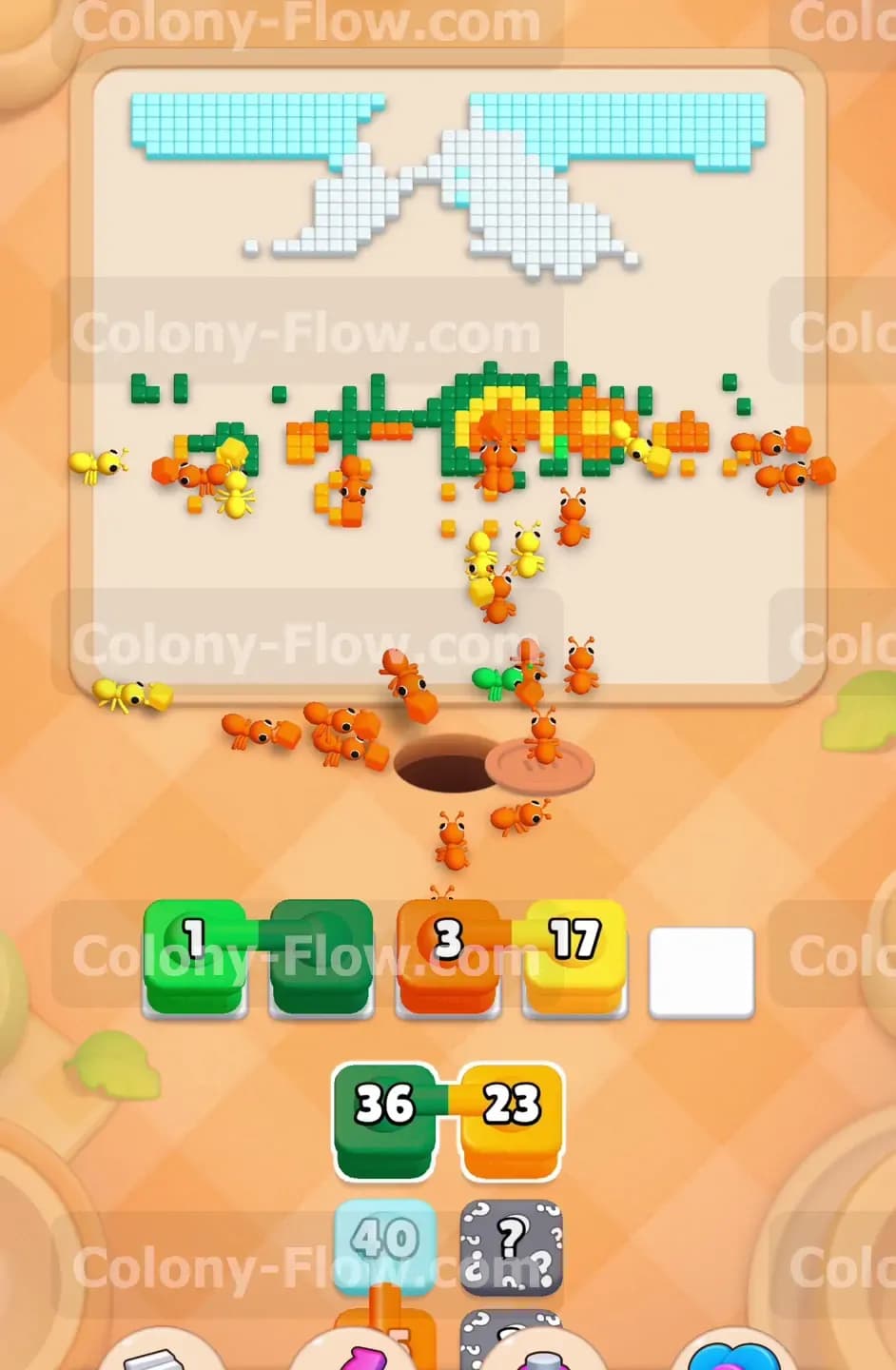
Throughout the previous steps, you have been pulling blocks from the top rows of the tray. This action continuously reveals the hidden boxes in the lower rows. The grey blocks with question marks will flip over and show their true colors. Once a hidden box reveals itself, you treat it like any normal block. Assess the board and find the matching color. During this late stage, you will also uncover connected green blocks and more connected yellow blocks in the tray. Hidden boxes often hold the exact colors you need to finish a difficult section. Tap the connected green blocks to clear the final pieces of leafy stems clinging to the edges of the flowers. Green stems often hide right at the edges of the original flower shapes. Only tap these newly revealed blocks if their corresponding tiles on the board are completely exposed. Patience with the hidden boxes and connected blocks keeps your waiting slots safe from a sudden jam.
Step 7: Funnel white ants into the remaining central clouds
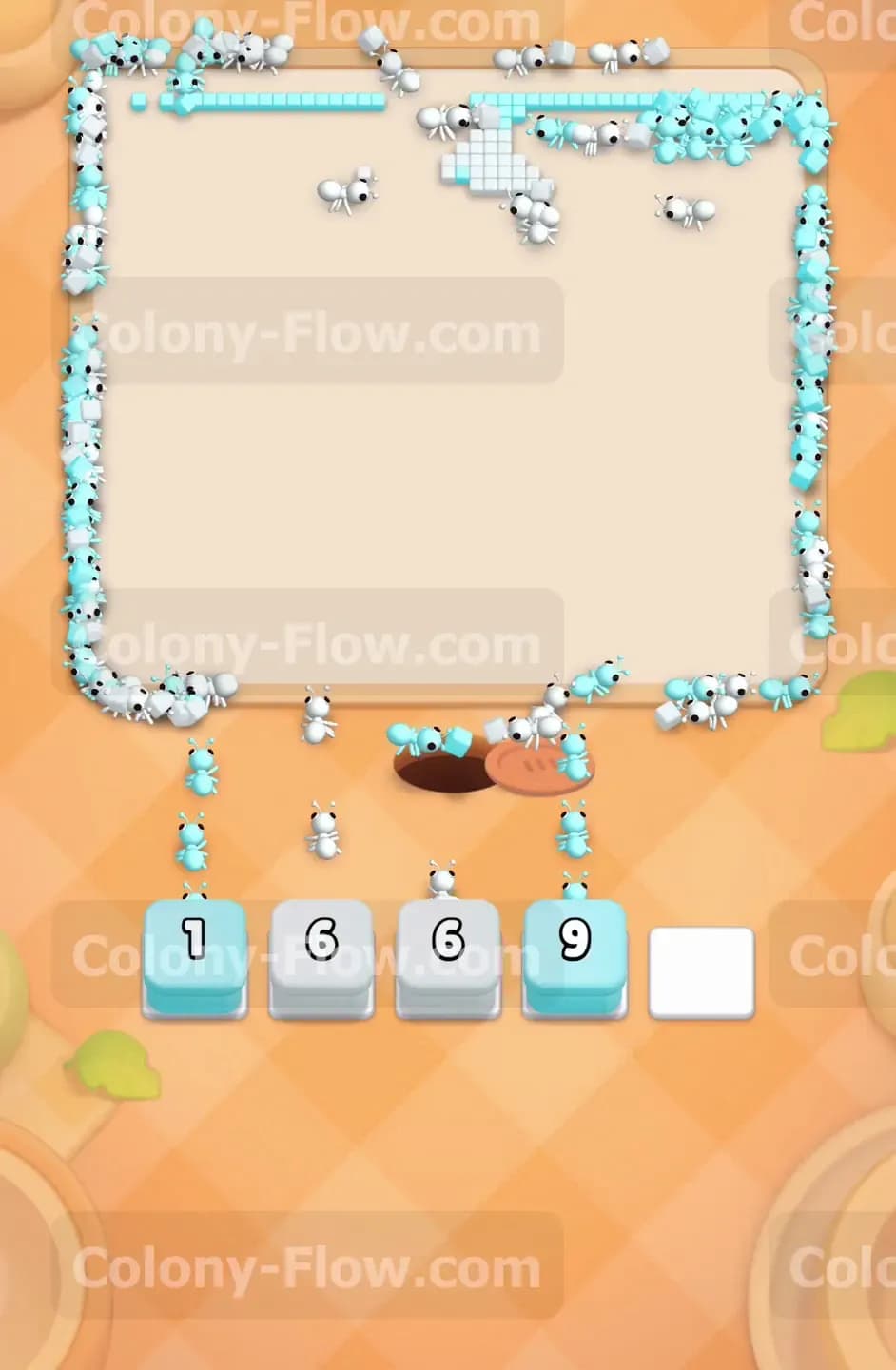
The bottom half of the picture is entirely empty by now. The only things left are the white clouds floating in the middle of the sky and the top borders of light blue. Tap your remaining white blocks to send ants after the clouds. Because the entire bottom of the board is clear, the white ants will travel incredibly fast. They will sweep across the empty canvas and quickly dismantle the cloud formations. White ants look like a small snowstorm moving over the empty background. You will encounter high numbered individual white blocks during this phase. Let the ants work through the numbers. Keep a close eye on the remaining cloud tiles. Clear every piece of cloud to prevent white blocks from getting stuck in the tray. You want to make sure every single white tile is exposed so the blocks in your waiting slots drain completely to zero.
Step 8: Clear the final light blue sky boundary to finish the level
The final stretch of the puzzle involves clearing the very top edge of the light blue sky. At this point, your tray will only contain light blue blocks. The board will be almost entirely empty except for a thin frame of blue pixels along the upper boundary. Tap your final light blue blocks and watch the ants swarm the edges. They will travel up the sides and march across the top to eat the last remaining tiles. Light blue ants will line the entire top border in a straight row. Because the path is completely unobstructed, you can tap all the remaining blocks in quick succession. The waiting slots will not jam because the ants have infinite access to the target tiles. You will see the final numbers drop to zero as the sky vanishes. Once the final blue pixel disappears, the ants will finish their current paths and you will win the level.
Final Thought
Colony Flow Level 529 rewards patience and careful slot management. By clearing the borders first and working your way inward, you keep the ants moving and avoid deadly traffic jams. If any step above feels hard to follow in text, I encourage you to watch the video above this article to see the exact timing in action.